Teenage Sailor’s Diary Records Desperate Escape from Victorian Pearl Trade
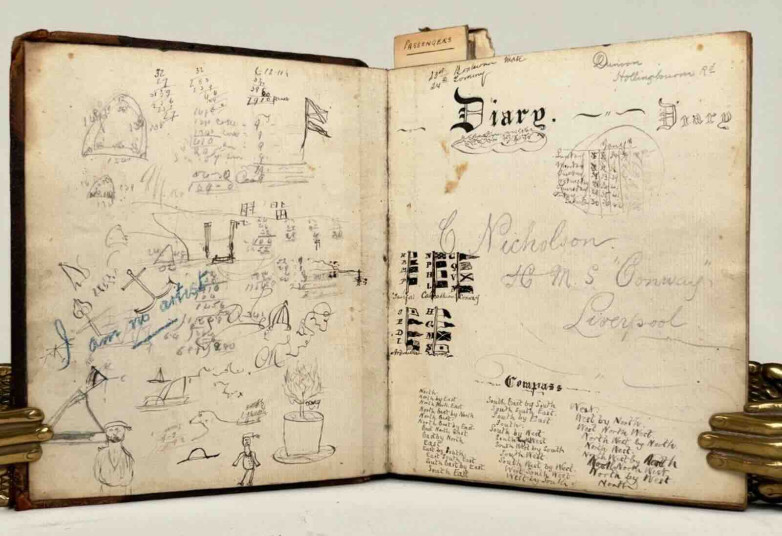
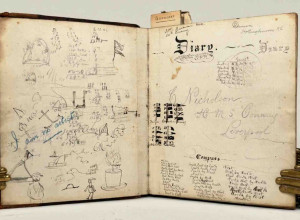
Colin Nicholson's maritime diary



Ahead of the UN’s International Day for the Abolition of Slavery on December 2, a newly transcribed manuscript brings an extraordinary ocean rescue into focus, alongside the human cost of an industry that supplied Victorian fashion.
A newly transcribed handwritten sea diary offered by Arch Books written by teenage Colin Nicholson follows more than five years of voyages between 1880 and 1885, from Britain to the Mediterranean, Australia, New Zealand and Rangoon. A former HMS Conway cadet who later became a merchant captain, he was 13 when it begins and 19 when he witnessed the rescue that makes the manuscript particularly striking.
On April 11, 1885, his ship rescued three pearl fishermen who said they had spent 40 days in a small boat after fleeing ill-treatment off north-western Australia.
A coat and a pair of trousers flew from their masthead as a distress signal. Two men could barely keep their feet, the third could no longer stand and had to be lifted aboard. Nicholson wrote: “His pulse was only just moving,” believing that a few more hours might have proved fatal.
They had reportedly gone three days without food, caught rainwater in a sail during a squall, and “kept alive by chewing their boot leather”. One had resorted to drinking seawater. Nicholson estimated that they were some 2,500 miles from North West Cape.
Once aboard, the men described signing on in Singapore for three years of pearl fishing at $10 a month. Instead, wages had been withheld, clothing was sold to them at exorbitant prices, and they had suffered such ill-treatment that they eventually took a boat and fled.
"What makes this especially relevant is the wider industry behind their story," said Arch Books founder Guy Nathan. "Victorian demand for pearl shell supplied the mother-of-pearl buttons, buckles and decorative objects found in British wardrobes and homes. A small, beautiful object could have a deeply troubling human history.
"There is a maritime mystery within its pages, too. In June 1883, Nicholson recorded passing a teak gangway ladder at sea. A separate manuscript note says the mate recognised it as belonging to the Loch Fyne, which vanished after leaving Lyttelton with 35 people aboard, a possible clue to the missing ship’s fate.
"Elsewhere, the 16-year-old Nicholson describes “a splendid comet”, identifiable from the dates as the Great Comet of 1882, with passengers rising at four in the morning to watch it. These moments sit alongside storms, a birth at sea, shipboard ceremonies, sketches and the daily work of a young sailor."
The manuscript, an original handwritten voyage diary, 1880–1885, is offered by Arch Books at £1,750. It comes from the library of Martin Nicholson CMG (1937–2025), the British diplomat and Soviet affairs specialist.