

Bright Young Collectors | November 17, 2026 | Nate Pedersen

Book Collector Ryan R. Martins on Early Modern Curiosities, Books as Gifts, and Grangerization

Ryan Martins

Ryan Martins

Our Bright Young Collectors series continues today with Ryan R. Martins in London:

Where are you from / where do you live?

I am from Toronto, where most of my family still live, but have bounced around a bit. After stints in Oxford, New Haven, Belgium, and Boston, I have now settled in London where I have just recently bought a house so will presumably stay put for a while. 

What did you study at University? What do you do now for an occupation?

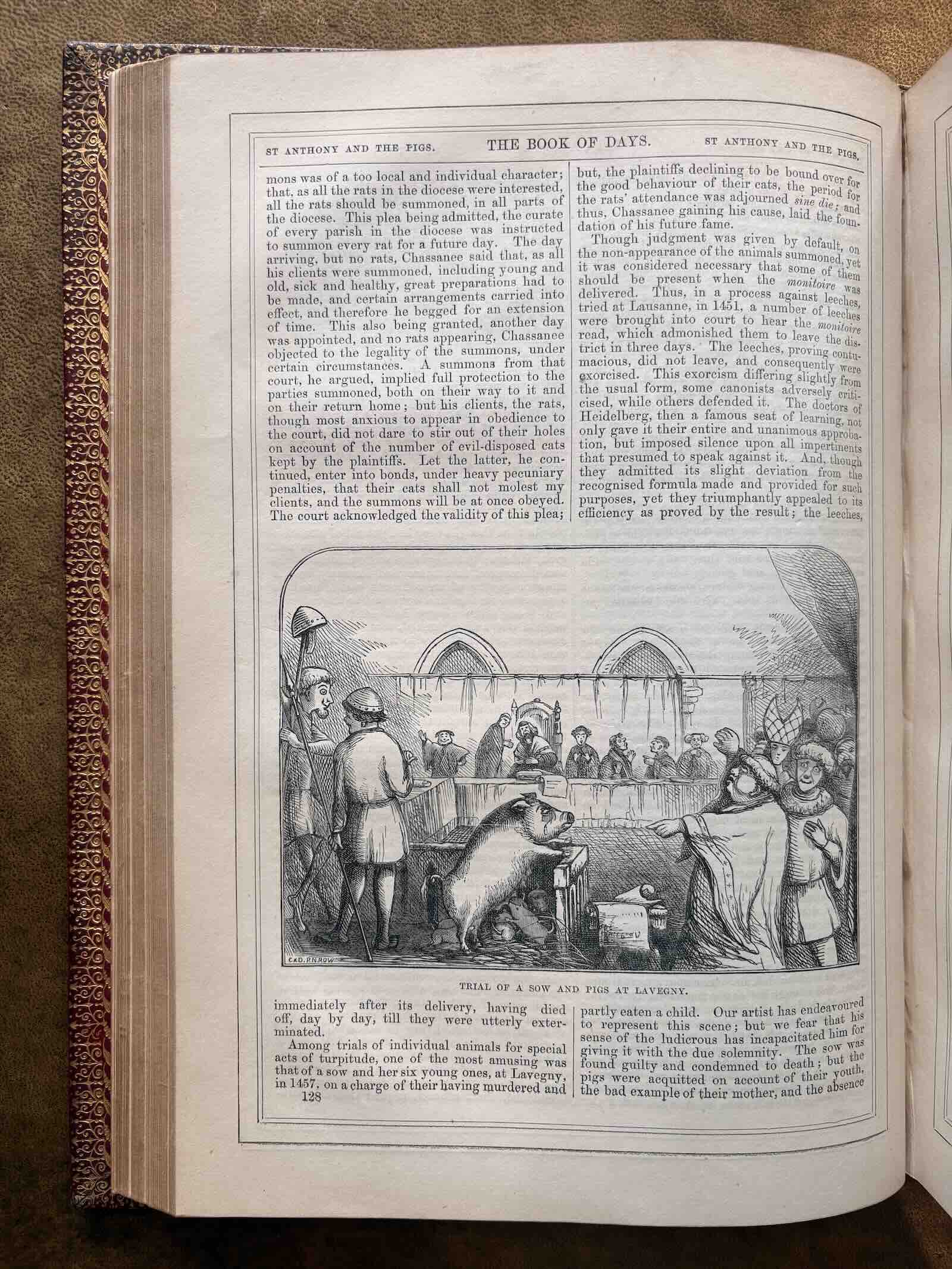
I dropped out of business school to study philosophy at the University of Toronto. It was one of the best decisions I ever made. From there I continued on to graduate school in philosophy at Oxford before deciding gainful employment was probably the way to go and ended up at Yale for law school. At Yale they awarded me the “rare book fellowship” to give me an official excuse to spend three years ignoring the law and playing with the rare book collection instead. While my classmates were writing on serious sounding things like the administrative state and tax treaties, I wrote instead on the medieval practice of putting pigs on trial for murder. 

Perhaps needless to say, I didn’t practise law for long. I now have a job I love, and one I didn’t know existed until I landed it. I work for a boutique consulting firm where I am a strategy consultant for arts & cultural organizations, often museums, but occasionally libraries too. 

Please introduce us to your collection. What areas do you collect in, and how large is it?

The easiest way to describe my collection is perhaps to say it is on early modern curiosities. The largest portion of that is works by or about eccentrics, broadly defined. That is, the weird and wonderful characters that inhabited the long (in my case, sometimes very long) 18th century. Rogues and villains, dwarfs and giants, witches and conjurors, lushes and libertines, pirates and pickpockets, oddballs and outcasts, frauds and cheats, highwaymen and adventurers, imposters, hoaxers, charlatans, rakes and the like. I'm sure you know the kind. Think of Ricky Jay's collection, or Stuart Bennett's catalogues. Caulfield's prints or Granger's class of “Persons remarkable from a single Circumstance in their Lives".

It is roughly 200 titles in perhaps 300 volumes, plus another 50 or so prints and a similar number of pamphlets. The vast majority are from between 1700 and 1850, and a great number of the books are illustrated. Together they cover the lives, likeness, and (mis)deeds of many hundreds of eccentric characters who lived over a period of about 200 years.   

What was the first book you bought for your collection?

The earliest was probably an early 20th century set of the Newgate Calendar (London, 1926), a little over 15 years ago. I lusted after the lovely illustrated full-calf 18th century sets I would see at bookfairs, but at that time they were out of my price range by at least an order of magnitude. 

How about the most recent book?

I have recently upgraded to a beautifully bound copy of Nathaniel Wanley’s Wonders of the Little World (London, 1806). It is an extensive compendium displaying the various facilities, capacities, peculiarities, perfections, and defects, and deformations of the human body and mind. It serves as a sort of encyclopaedia of oddity for me, and is a great source book for discovering new eccentric characters. Its chapters include “Of Giants, and such as have exceeded the common Proportion in stature and Height,” “Of such who, after Death, have concerned themselves with the Affairs of their Friends and Relations,” and “Of such as having been wild, prodigal, or debauched in their Youth, have afterwards proved excellent Persons”.

And your favorite book in your collection?

My favourite books in my collection are of course the ones I have received as gifts. A friend, also a collector, and I were just speaking about the special form of knowing someone that is required to gift them something which genuinely belongs in their collection. There is a unique sort of joy in receiving those gifts, and they always stay with me. 

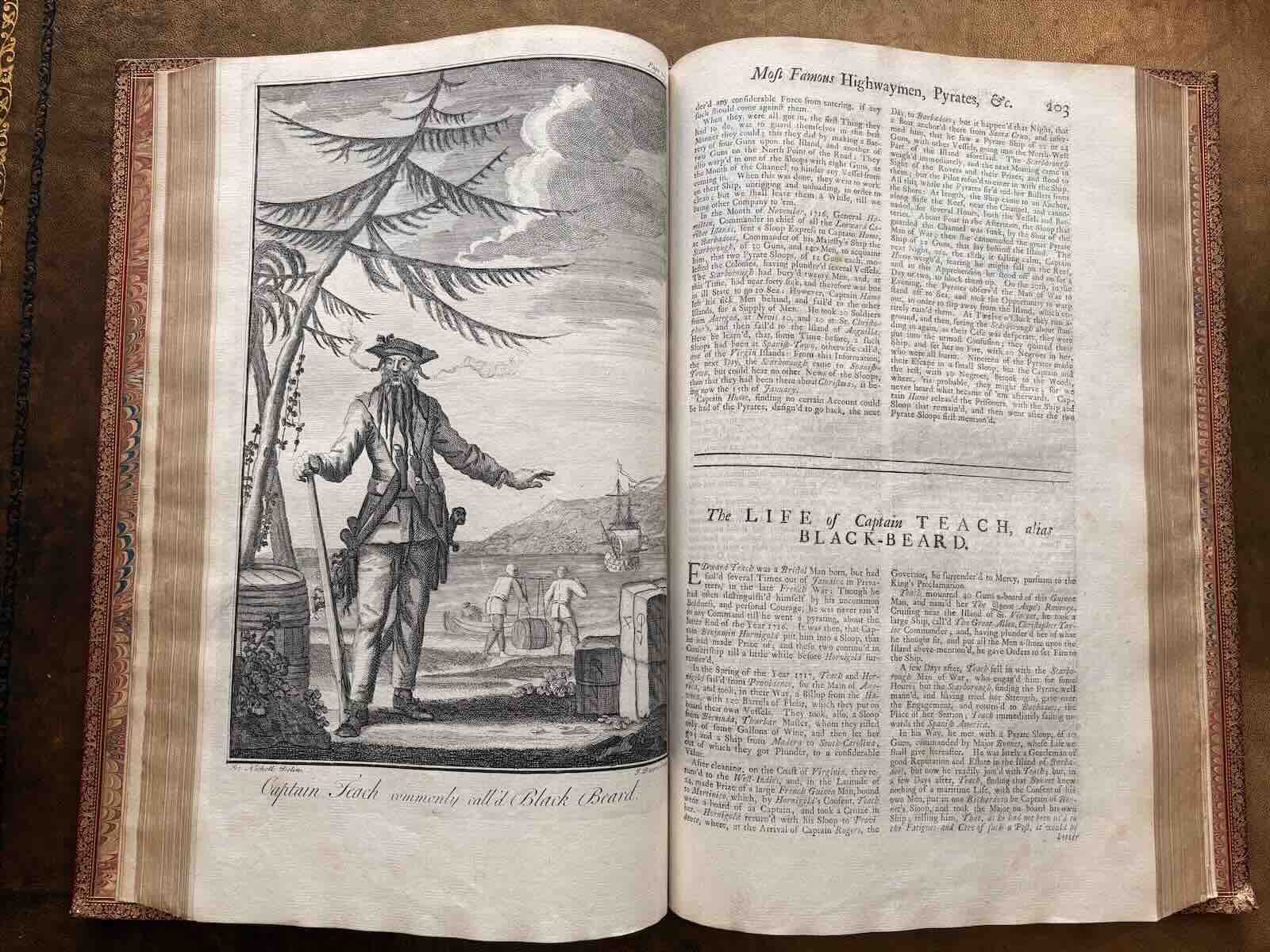
My favourite book that I bought for myself is a first edition copy of Captain Charles Johnson’s A General History of the Lives and Adventures Of the Most Famous Highwaymen…and Pyrates (London 1734). If I had a desiderata list, it would be the item that has spent the longest on it. I first remember pressing my face against the glass of an exhibition case in some library to get a closer look at the engraving of Blackbeard back when I was a child. I was finally in a position to buy a copy late last year. I treasure it. 

Charles Johnson, A General History of the Lives and Adventures of the Most Famous Highwaymen, Murderers, Street-Robbers, &c (London, 1734)
Ryan R Martins

Charles Johnson, A General History of the Lives and Adventures of the Most Famous Highwaymen, Murderers, Street-Robbers, &c (London, 1734)

1/5
Robert Chambers, The Book of Days (London and Edinburgh, 1864), depicting the trial of a pig
Ryan R Martins

Robert Chambers, The Book of Days (London and Edinburgh, 1864), depicting the trial of a pig

2/5
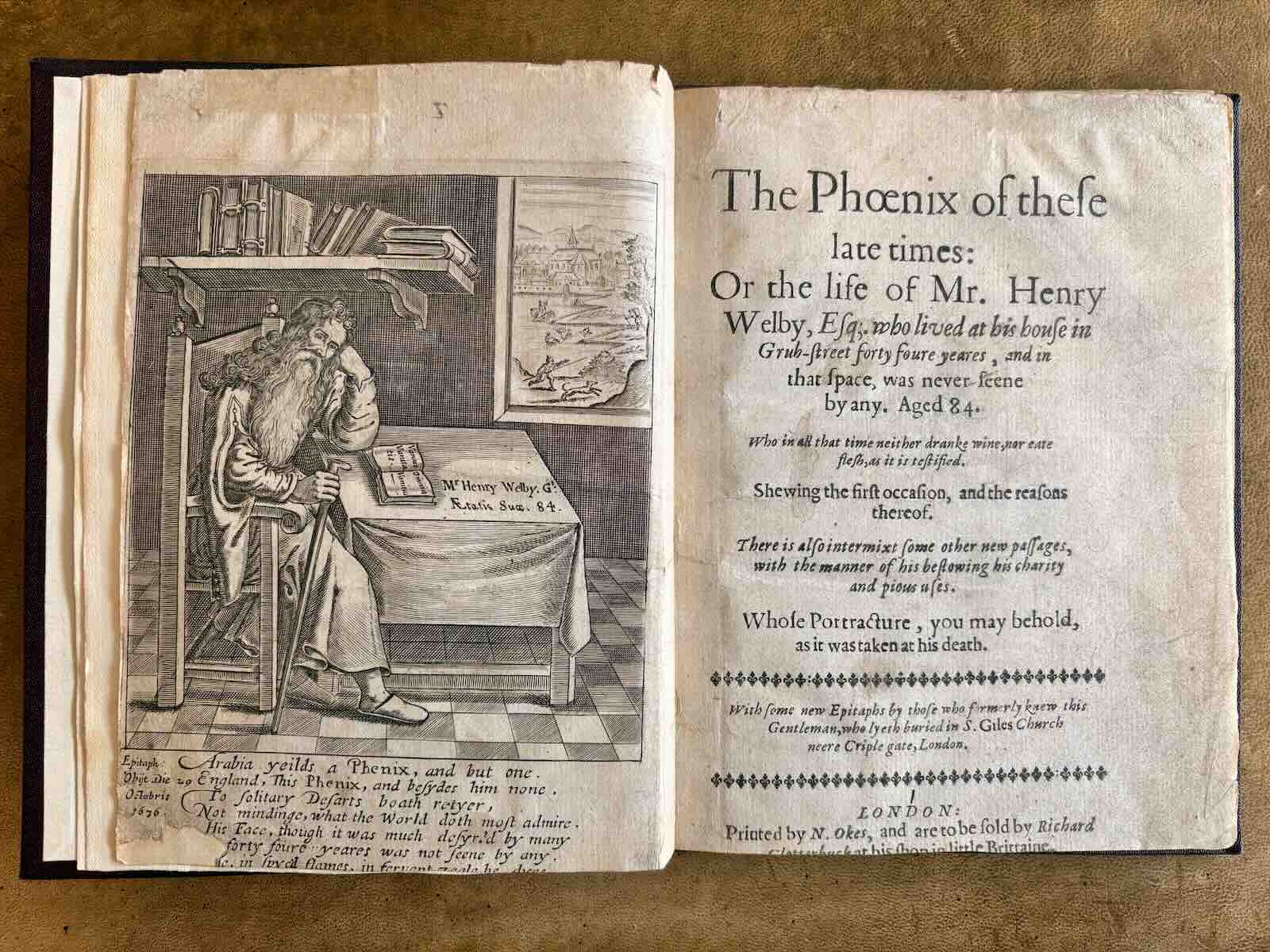
Thomas Heywood The Phoenix of These Late Times; or, The Life of Mr. Henry Welby, Esq. (London, 1637), The Duke of Portland's copy
Ryan R Martins

Thomas Heywood The Phoenix of These Late Times; or, The Life of Mr. Henry Welby, Esq. (London, 1637), The Duke of Portland's copy

3/5
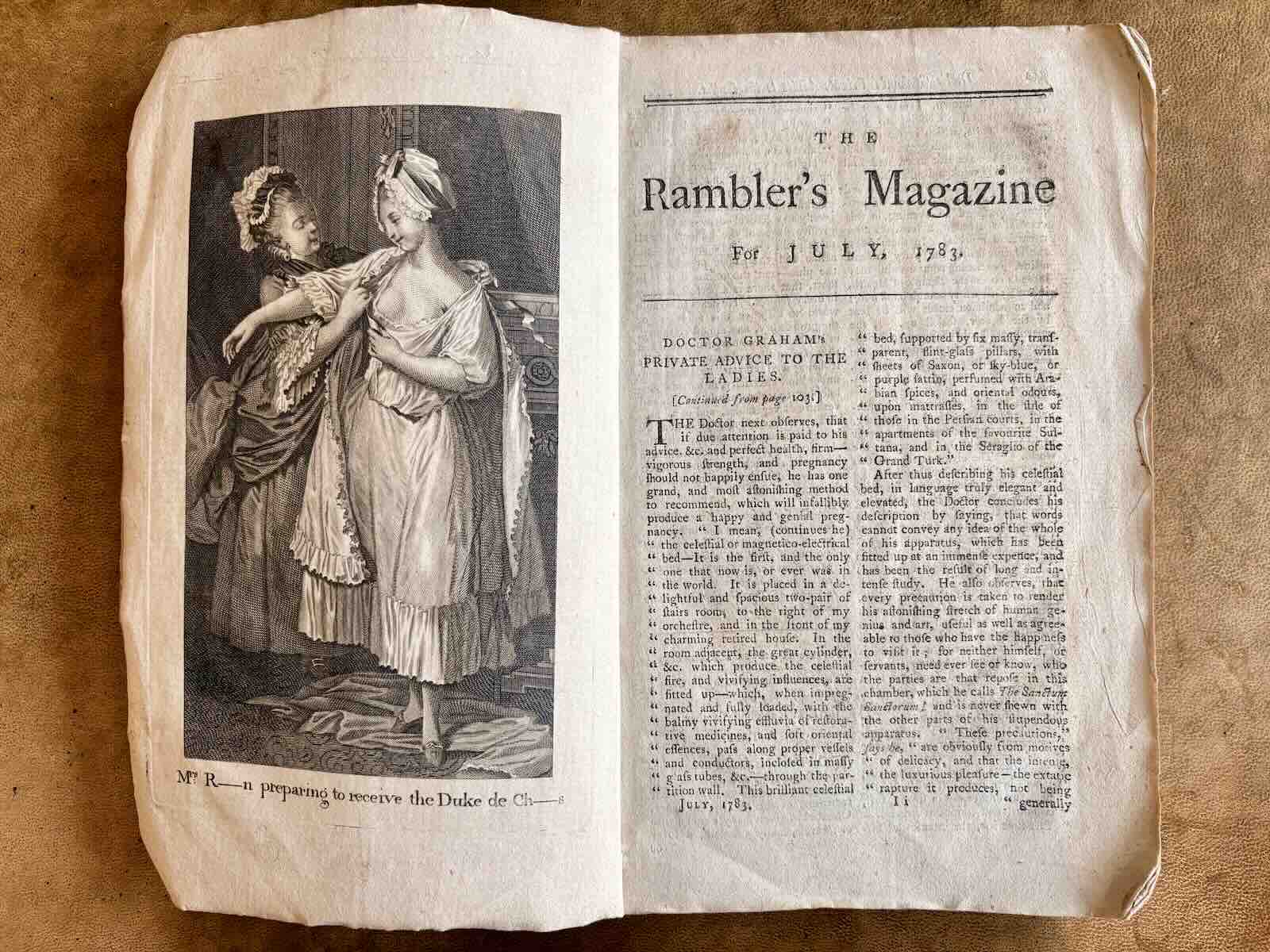
The Rambler’s Magazine (London, July 1783) with an article from the quack sexologist James Graham discussing his electro-magnetic musical Grand State Celestial Bed
Ryan R Martins

The Rambler’s Magazine (London, July 1783) with an article from the quack sexologist James Graham discussing his electro-magnetic musical Grand State Celestial Bed

4/5
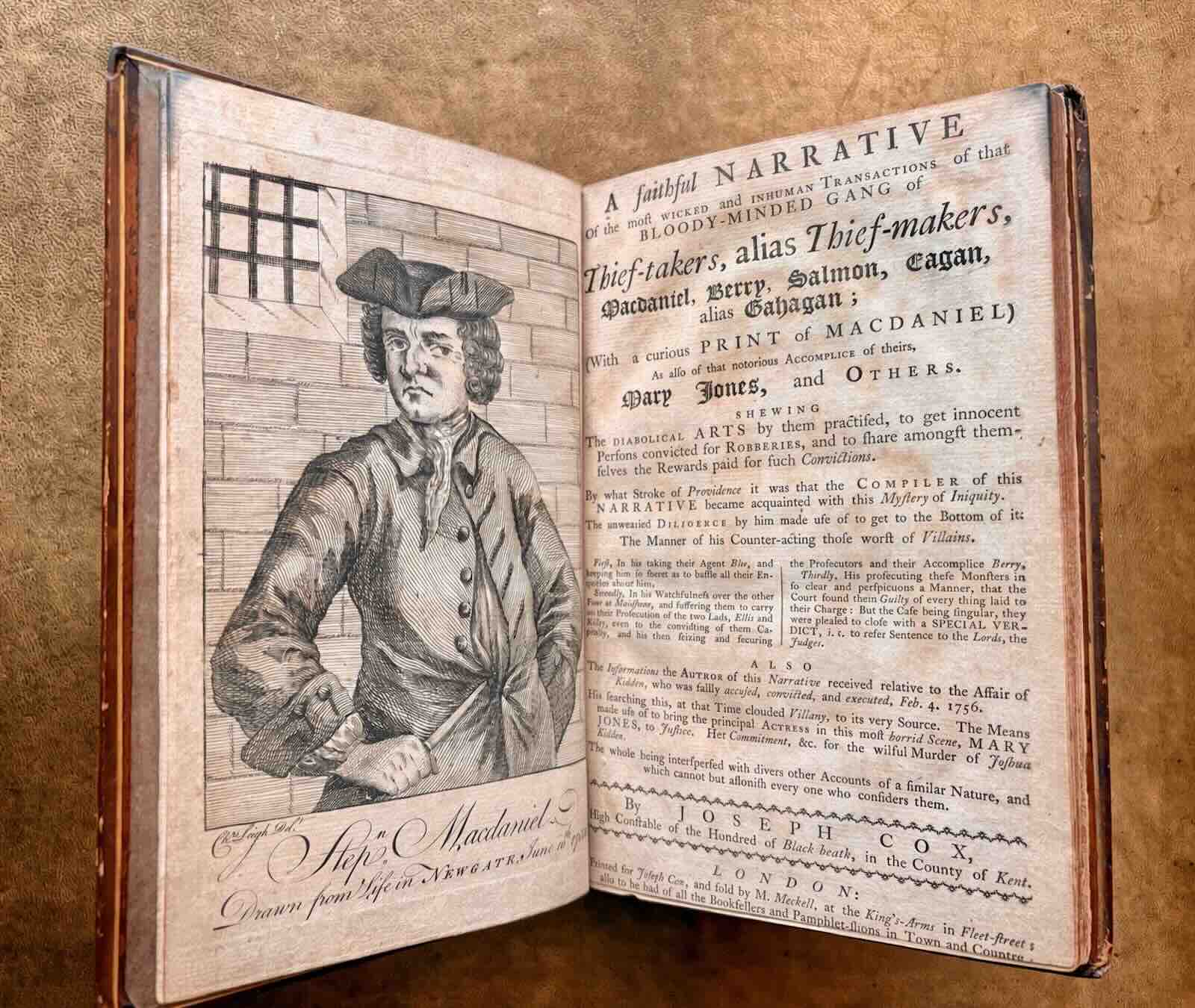
Joseph Cox, A Faithful Narrative of the Most Wicked and Inhuman Transactions of That Bloody-Minded Gang of Thief-Takers, alias Thief-Makers (London, 1756)
Ryan R Martins

Joseph Cox, A Faithful Narrative of the Most Wicked and Inhuman Transactions of That Bloody-Minded Gang of Thief-Takers, alias Thief-Makers (London, 1756)

5/5

How do you organize your collection?

I don’t, really. It is modest enough that I don’t need a formal system, and the disorganization means in searching for something, I often rediscover something else I had momentarily forgotten about. 

Best bargain you’ve found?

I recently picked up three issues of the very rare 18th century edition of the Rambler’s Magazine (London, 1783), still in its paper wraps, for £30 on eBay. Not to be confused with Johnson’s The Rambler, these are subtitled The Annals of Gallantry, Glee, Pleasure, and the Bon Ton and are described by the publisher as being “to furnish the man of pleasure with a most delicious banquet of amorous, bacchanalian, whimsical, humorous, theatrical and polite entertainment”.

There are vanishingly few complete runs anywhere, and even individual issues are hard to find, and sell for very high prices in part because of the erotic engravings that serve as the frontispieces to each issue. They fit the collection, as one early 20th century writer noted, “supplying as they do a wealth of biographical information that cannot be found elsewhere...and they should not be disregarded because of their obscenity”.

How about The One that Got Away?

The one I think about most is a Grangerized copy of Chamber’s Book of Days (London, 1872). As its subtitle makes clear (A Miscellany of Popular Antiquities in Connection with the Calendar, Including Anecdote, Biography, & History, Curiosities of Literature and Oddities of Human Life and Character) it is in many ways the single book that best encapsulates the collection. 

It was originally published in two hefty quarto volumes, with odd historical anecdotes for every day of the year and hundreds of illustrations. A copy went at auction a few years ago that had been expanded from two to 12 volumes – one for every month – by the addition of over two thousand extra plates. It was my first ever phone bid as I wanted to make absolutely sure I wouldn’t miss it. I was prepared to spend all the money I then had, and then some. I still lost. Badly. If the person who bought it is reading this – get in touch! 

What would be the Holy Grail for your collection?

Besides that copy of the Book of Days? It wouldn’t actually be a printed book, but a magnificent two-volume album of some 500 17th and 18th century prints of remarkable and eccentric characters. Many of the individual prints in it are exceedingly rare, and is made better by the fact that many have manuscript biographical notes of the characters they depict scribbled in their margins. 

It was put together by the capital g Great print collector William Esdaile and most recently owned by Ricky Jay. I am lucky in some sense, because I actually know where my Holy Grail is. It is owned by a friend of mine, so I can go paw at it as often as they dare let me. But as any collector knows, access is a poor substitute for ownership. 

It is a lifelong project of mine to recreate that album slowly, and over time, by collecting the prints in it where and when I can and having them bound together. One day. 

Where do you most often find books for your collection?

What I like about my collection is that there is no checklist, and I am always discovering new things. While the ratio is decreasing, I would say about half the works I buy are ones I did not know existed until I bought them. Because of that, I always have to be on the lookout. Auctions, book fairs, and through dealers online tend to be where I buy most. 

What would you collect if you didn’t collect books?

Prints? That feels like cheating. Arms and armour realistically, early 20th century sailing yachts if you’ll permit me to dream.